Ultra High Frequency Receiver.

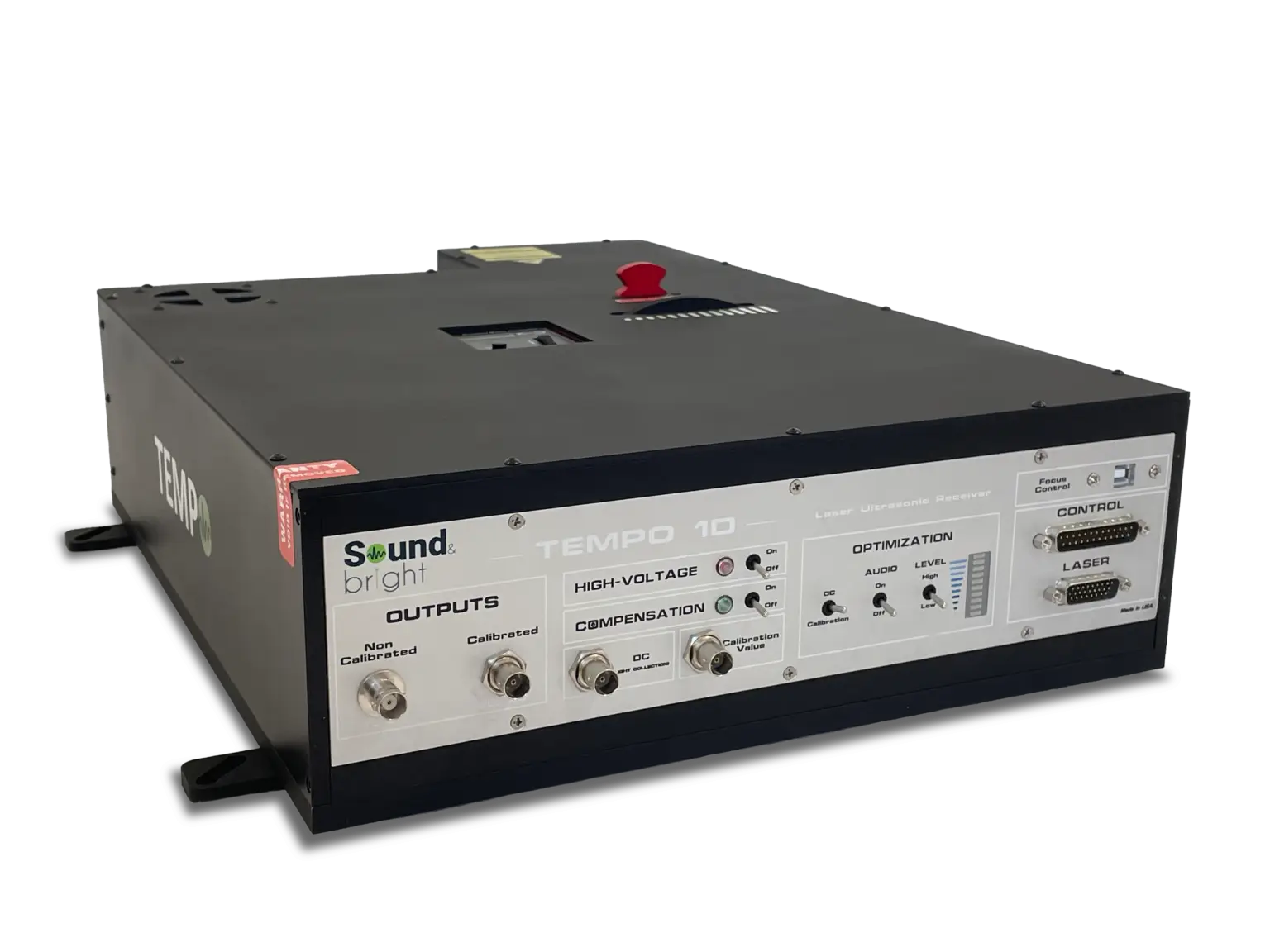
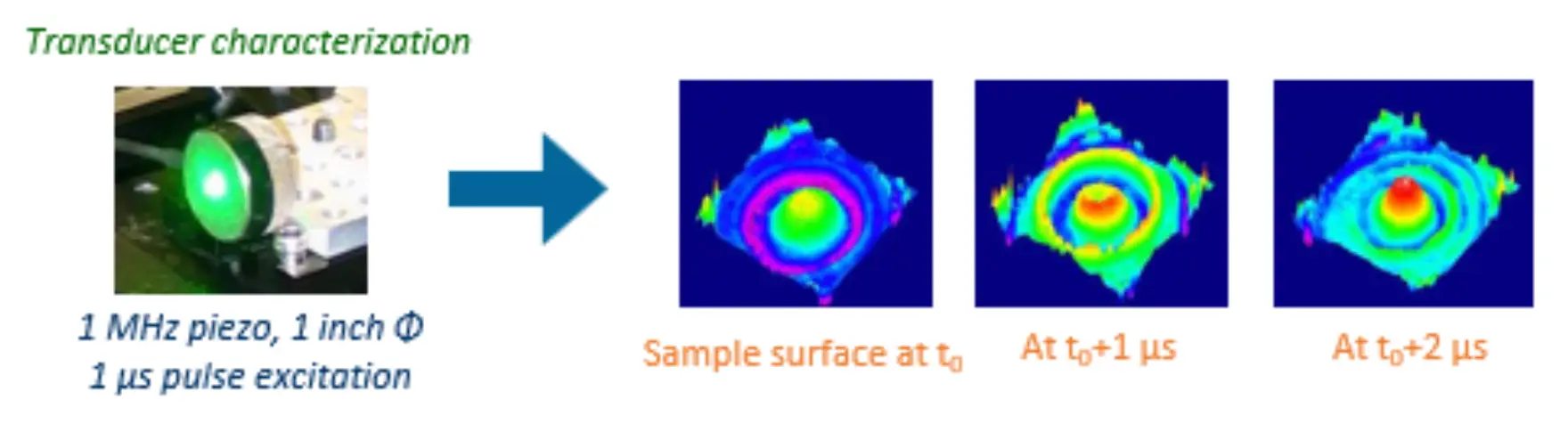
The Tempo 1D is capable of detecting surface displacements resulting from the propagation of UHF ultrasounds, up to GHz. The system measures the spatial component normal to the surface of the target tested. It is used for characterization of micro and nano components. The Tempo 1D is the result of 15 years of research, development and customer feedback. The system has become one of the most popular laser receiver worldwide for high frequency and ultra high frequency inspection.

FEATURES

Ultra-High Frequency
The Tempo 1D can measure surface displacements resulting from the propagation of Ultra High Frequency ultrasounds, up to GHz.

High Efficiency Optical Design
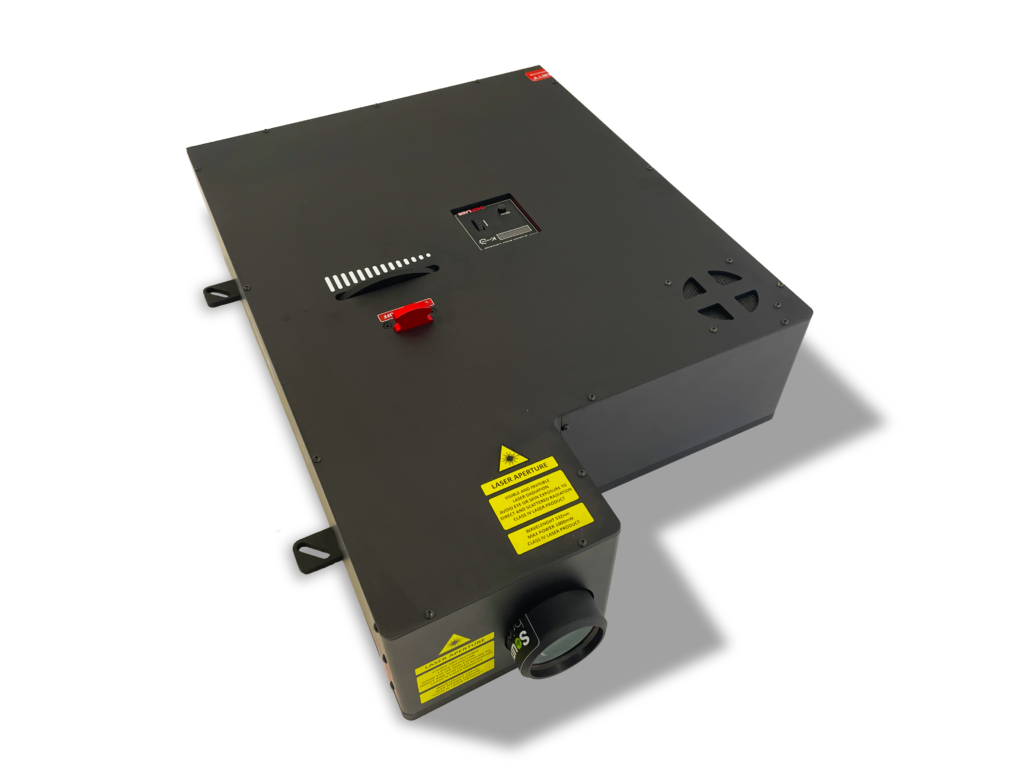
The Tempo 1D is optimized to process highly speckled beams. It does not require a single speckle (reflection on mirror-like surface) like classical coherent laser ultrasonic receiver. It also includes a large, 2-inch aperture for high collection-efficiency, ensuring high sensitivity on light-scattering surfaces. The Tempo 1D exhibits high optical etendue.

Measurement Precision
The Tempo 1D produces an analog signal that is directly proportional to surface displacement at frequencies above a cutoff frequency.

Unaffected by Low Frequency Acoustic Noise
Performance is unaffected by low frequency acoustic noise caused by turbulence in the beam path (Below the cut-off frequency ~ 100Hz without compensation, and up to 10kHz with the internal compensation). The Tempo 1D has an integrated electronic feedback loop that compensates for low frequency acoustic noise up to 10 kHz.

Signal Indicators
Incorporated within the system are visual and audible signal indicators designed to help the user optimize their measurement setup. For absolute calibration, the Tempo 1D also includes an internal calibration signal and its output is autmoatically calibrated to 100mV for 1nm displacement.

TECHNICAL SPECIFICATIONS

TECHNOLOGY

Two-Wave Mixing

DETECTION

Out-of-plane

CONFIGURATION

Free-Space

INTERNAL LASER POWER

Up to 1500mW @ 532nm

NESD (out-of-plane motion)

2.10-7 nm. (W/Hz)1/2

DETECTION BANDWITH

Up to 1GHz

DIMENSIONS (L*W*H)

492*300*114 mm

WEIGHT

14Kg

ELECTRICAL REQUIEREMENTS

110V/50Hz – 220V/60Hz


Two-Wave mixing in a photorefractive crystal

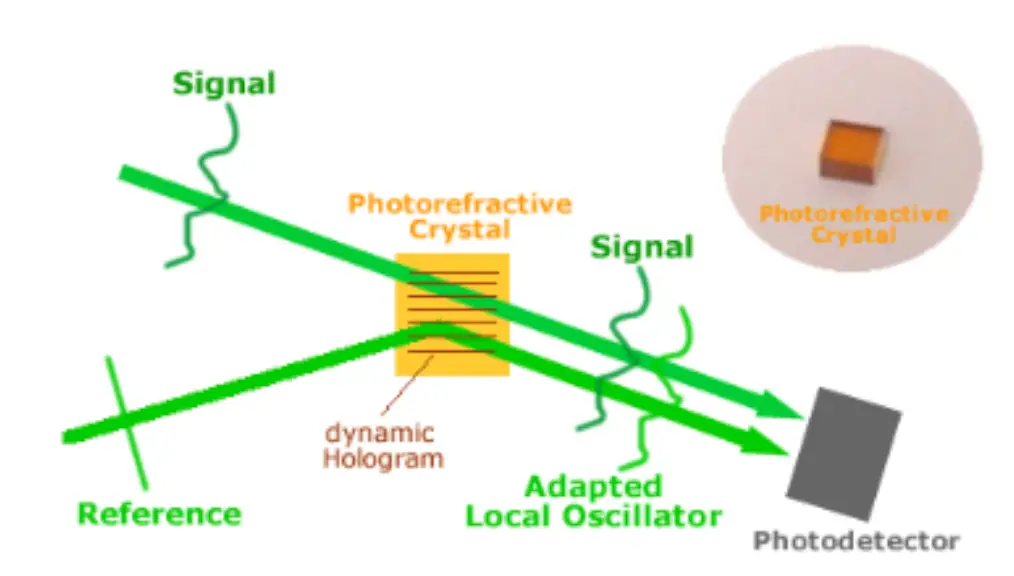
The Ultra high Frequency receiver is based on photorefractive two-wave mixing (TWM). A dynamic hologram resulting from the interferences between the reference beam and the signal beam is recorded in the photorefractive crystal. The diffraction of the reference beam by the dynamic hologram creates a local oscillator adapted to the signal i.e. same wavefront and same direction. Two-wave mixing in a photorefractive material is equivalent to an adaptive beam splitter. The two beams – signal and adapted local oscillator – are in perfect quadrature and are incident on the photodetector that delivers a homodyne signal.

High performances photorefractive crystals are used with reliable properties to insure an optimum two-wave mixing process. A high voltage field is applied on the photorefractive crystal in order to optimize the coupling and maintain the quadrature between the signal and the diffracted reference (adapted local oscillator). Photorefractive TWM has been extensively studied over the past 40 years and is a well-controlled process.

Rational

The Two-Wave Mixing (TWM) approach offers the highest optical etendue of any laser ultrasonic technology. It can collect a great number of speckles, making it ideal for laboratory measurement on any surface type: polished or unpolished, flat or curve. When combined with a fast collection optic (F/2) a TWM interferometer allows for highly sensitive measurements on a wide-range of samples, including highly diffusive samples. The upper frequency limit of a TWM interferometer is defined by the bandwidth of the photodetector and can be chosen to be very high: up to GHz. There is therefore no upper frequency limit for the TWM process.

Optical Design

The internally generated laser beam is split into two: a probe beam and a reference beam. The probe beam travels through the system before coming into contact with the surface of the sample. From there, it is reflected back into the system. The reference beam never leaves the Tempo and is instead redirected towards a photorefractive crystal. In the photorefractive crystal (a Non-Linear Material), the two beams are combined, or mixed to create a dynamic hologram. If there is a perturbation at the surface of the sample, the system measures the phase variation between the reference and probe beams. This variation is then converted into an electrical signal by the photodetector. The response time of the process allows the Tempo to compensate for slow phase changes in the signal beam. The diffraction of the reference beam on the dynamic hologram creates a local oscillator adapted to the signal i.e. same wavefront and same direction. The two beams are incident on the detector. Two-wave mixing in a photorefractive material is equivalent to an adaptive beam splitter. It allows the Tempo to achieve perfect homodyne detection on a highly speckled beam.


When the surface of the work-piece or sample is displaced as a result of ultrasonic excitation, there is a transient phase change induced onto the signal beam. The coherent detection process converts this phase change into an amplitude change that is proportional to the phase change. To provide linear detection of the transient phase-modulated signal beam, the phases of the two combined beams must be biased in quadrature. In the Tempo, quadrature is achieved by the application of a high voltage dc electric field to the Photorefractive Crystal. The dc field also serves to enhance the strength of the real-time hologram.

APPLICATIONS

Our systems have a multitude of potential applications. Listed below are a just few brief descriptions of feasibility studies done using our receivers. If you have any questions regarding applications, we would be happy to lend our expertise to your problematic.

Laser-ultrasonics are used to measure fundamental material properties such as the elastic modulus, shear modulus and Poisson ratio. Those parameters are of great importance for estimation of active stresses and life service.

The laser receiver can also be used alone, without the generation laser, to listen to acoustic emission occurring when the sample is under stress.

Request a Brochure.

Brochure request - QUARTET
Scroll to Top